Thursday, 17 January 2013

Title Sequences

Title Sequences

The purpose of a title sequence is to introduce the film and give credit to;
  • Main Characters
  • Directors
  • Writers (screenplay)
  • Producers
  • Title of the film
  • Production Companies
  • Music by
  • Editors
A Film: In The Cut includes the following titles in the following sequence order:
Pathe'! production comany logo
Producer
Director
Main Actors
Casting
Music Composed by
Music Supervisor
Costume Designer
Editor
Production Designed by
Cinematographer
Writer (screenplay)
Novelist (what the film's based on)
Executive Producer
Title: In the Cut
 

Thursday, 10 January 2013

Cliffhangers

Cliffhangers


Cliffhangers are not always used but has a great effect on the audience, its a device that makes the audience question the end of the film and make them want to watch more.
 
Cliffhangers come across when there is a difficult dilemma that the main character has to face, like in the famous 1969 film, The Italian Job. Strictly speaking this film isn't a thriller but has the most famous, witty ending known to film. This part of the film is right at the end, and everyone involved in the stealing of the gold, are all in a coach and literally 'Cliffhanging'. The characters involved in the stealing are inches from it all being dropped off the edge of the cliff, so the main character has to face the difficult dilemma.

Red Herrings

Red Herrings


A Red Herring is a device used in thrillers. It is a device with an aim to divert the audience from the truth or an item of significance.
 
It can be teamed up with other devices such as; Enigmas to create suspense.

Enigmas

Enigmas


Enigmas are puzzles, something mysterious, inexplicable or a riddle or a complicated problem.
 
In a thriller this is commonly something that a character/hero of the film must try and solve before the narrative is resolved and the film finishes.

Psychological Thrillers

Psychological Thrillers


Many people love to watch psychological thrillers because, like in many films they like to guess what will happen next.
 
The suspense created in this sub-genre of film often comes from two or more characters preying upon each other's minds. By doing that they could be playing deceptive mind games, or just try and destroy the other's mental state. However it can come from one character if they're trying to resolve conflicts in their own minds. It's usually a conflict that has happened to them.
 
Psychological thrillers are all about mind, conflict and the past. The 1972 film Sleuth is a good example of this type of sub-genre.
 
Sleuth is about a man called Andrew Wyke and a man called Milo Tindle, they are both in love with Andrew's wife, so this makes Milo her lover. Andrew wants to find away out of this but needs the help from Milo. But theres a big problem as they don't like each other, but they can't afford for the other one of them to get in trouble. In the plot the advantage for both characters shift, this keeps the film interesting and lively.


Rope (1948)

Rope (1948)


Rope is another film created by Alfred Hitchcock. It tells the story of two young, wealthy men, Brandon and Philip, who strangle and murder a friend of theirs just to see if they can get away with it.
 
They then invite other close friends, including the murdered man's parents, to their apartment for a dinner party, whilst hiding the body in a chest/box in their sitting room, just to see if they can get away with it.
 
Whilst at the dinner party there was a large amount of suspense for the audience, they would probably be thinking What will happen, will they get away with it?


Preliminary Task

Preliminary Task


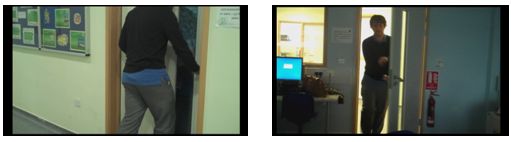
During lesson we were given a Preliminary task to complete. This was to demonstrate continuity editing. The task must show the following skills:
  •  Match on Action
  • Shot/Reverse Shot
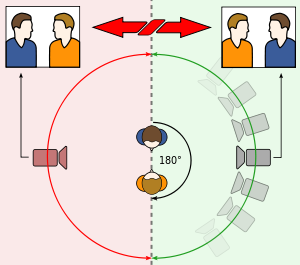
  • 180 degree rule
  • Eyeline Match

In one of my other posts the techniques above have been explained. But here they are again:

Match on action:
Is when we see a character start an action in one shot and then see them continue it in the next.

Shot/Reverse shot:

Is when one frame is shot reasonably close to fit the persons face and the other persons shoulder in the frame. Then it is reversed to show the other persons face and the person they're talking to shoulder. Then it's reversed again, however many times that are desired.


The 180 degrees rule:
Is a basic guideline to help film action. It states that two characters in the scene should always have the same left/right realtionship to eachother.


Eyeline match:
Is self explanatory, for example in frame 1 we see Person A looking straight forwards, then in frame 2 we see Person B looking straight forwards, therefore it looks like they're looking at eachother.


Our Preliminary task is shown below, hope you enjoy!